Would You Do It in Slippers? A Real-Life Filter for Wellness Habits

Most wellness routines do not collapse in a dramatic way. They fade on a Tuesday. The kitchen counter is cluttered, the laundry is not put away, and you are already in slippers by 7:30 p.m. The routine that looked so sensible on a fresh Sunday morning now feels like a small chore with a moral attached.
That is where the slipper test comes in. It is not a scientific measurement or a personality quiz. It is a practical filter: if a wellness habit cannot survive you in slippers, on a low-energy evening, with very little ceremony, it probably will not survive your real life either.
This is not an argument for doing less forever. It is an argument for building habits that have somewhere to land when the day has been long. Ambition is fine. Fragile ambition is the problem.
What the Slipper Test Actually Measures
The slipper test looks at four things.
Friction. How many steps stand between you and the habit? Not the ideal steps. The real ones. Finding the mat, changing clothes, charging the headphones, locating the journal, cleaning the blender.
Sensory comfort. What does the habit feel, sound, taste, or smell like? If the first sensation is unpleasant, you will avoid it. A meditation cushion that is too firm, a tea you do not actually like, a cold room, a scratchy strap — these are tiny details with long shadows.
Time cost. Not the time the habit takes in theory, but the time it takes with setup, cleanup, and transition. A ten-minute stretch can become a thirty-minute production if you have to roll out a mat, find a video, and shower afterward.
Recoverability. What happens if you miss a day or two? Some routines are forgiving. Others make you feel like you have to start over from zero. The second kind rarely lasts.
The Five-Question Audit
Before you commit to a new routine, ask these five questions.
- Could I start this in slippers without changing clothes? Not every habit needs to be done in slippers, but the question reveals how much physical preparation is involved. If the answer is no, ask whether the preparation is part of the pleasure or just a barrier.
- What is the first physical sensation, and do I actually like it? The first thirty seconds matter. If the opening moment is pleasant — warm water, a soft floor, a familiar stretch — you are more likely to return.
- If I only had seven minutes, what would remain? A routine with a seven-minute version is more durable than one that only works at full length. The short version is not a failure. It is a lifeline.
- What happens if I skip two days? A good routine has a re-entry ramp. You can pick it back up without a ceremony of apology.
- Is the setup already where I need it? The closer the habit is to the place and moment it belongs, the better. Water by the bed. Shoes by the door. Journal on the kitchen table. The goal is to reduce the number of decisions between intention and action.
You do not need five yeses to begin. You need to know where the weak points are. A routine with one or two honest adjustments is often stronger than a perfect plan that only works on your best day.
Routines That Pass the Test
A few examples that tend to pass:
- A two-minute stretch beside the bed. No mat, no video, no outfit change. Just a slow reach, a gentle twist, and a few breaths before the day starts.
- A ten-minute walk after dinner. Shoes by the door, a familiar loop, no pressure to hit a certain pace. It passes because the setup is small and the time cost is honest.
- Three lines in a journal at the kitchen table. Not a full page, not a gratitude practice with rules. Just three lines about what the day felt like.
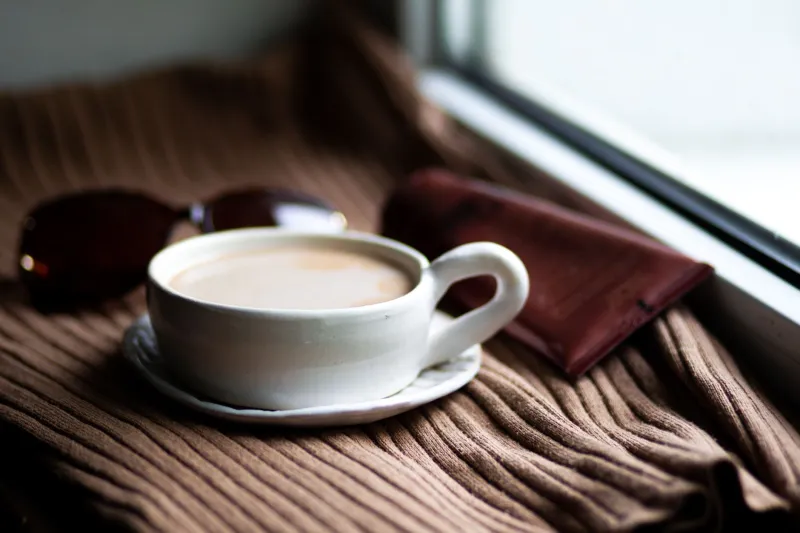
- A breathing pause while the coffee brews. The habit is attached to something that was already going to happen. That anchor does a lot of quiet work.
These routines are not impressive on paper. That is part of why they last. They are comfortable enough to repeat and small enough to recover when life gets messy.
Routines That Fail the Test
Some routines fail not because they are worthless, but because they are badly matched to ordinary life.
- A 6 a.m. hot yoga class across town. It can be a great practice and still fail the slipper test if it requires a commute, a shower, and a hair wash before work. The friction is not a character flaw. It is a logistics problem.
- A smoothie with nine ingredients and a blender to clean. The nutrition may be fine. The cleanup is the tell.
- A supplement stack with eight bottles and a specific timing chart. If the routine needs a flowchart, it will probably lose to a rushed morning.
- A cold plunge before breakfast. Some people love it. Many people love the idea of loving it. The sensory barrier is high, and the recoverability is low for beginners.
A failed routine is not a moral verdict. It is information. It tells you where the friction lives.
Adjust Before You Abandon
Before you quit a habit, try shrinking it. Can the full routine become a floor version? Can the morning practice move to the evening? Can the elaborate meal become a simpler one with the same sensory pleasure? Can you make the first step more pleasant and the cleanup less annoying?
A routine that only works in fresh-start energy is a seasonal guest. A routine that works in slippers is more likely to become part of the house.
The best wellness routine is not the most ambitious one. It is the one that still makes sense when you are tired, the light is low, and nobody is watching. If it can survive that, it can probably survive the rest of your week.