The Five Minutes Before You're Home: A Threshold Ritual
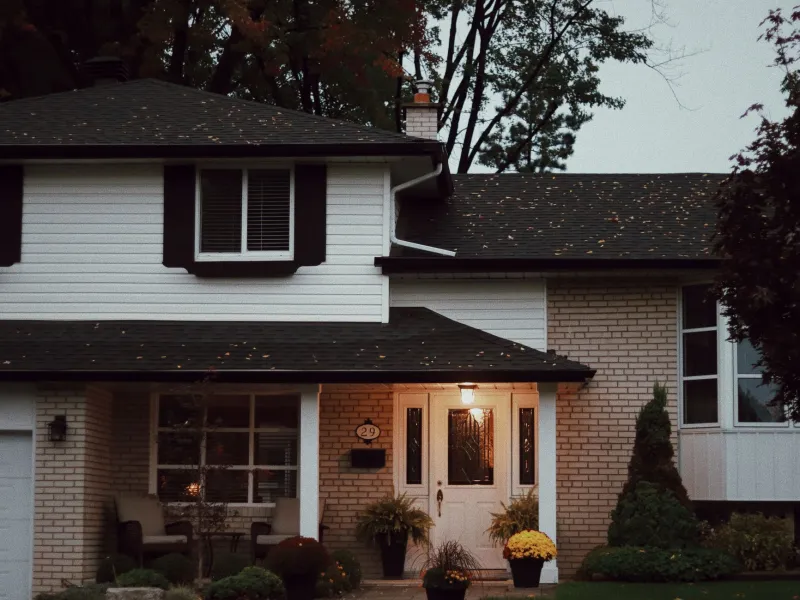
A friend of mine used to sit in her driveway for a full minute before going inside. Not scrolling, not calling anyone. Just sitting. She called it "the decompression zone," and at the time I thought it was a charming quirk. Now I think she was onto something that most of us are missing entirely.
We tend to think of rest as something that starts after dinner, after bath time, after the last email. Which means the transition itself, the actual crossing from work-mind to home-mind, gets no attention at all. We go from a spreadsheet to a kitchen counter in roughly eleven seconds and then wonder why we're still mentally drafting a reply to someone while stirring pasta.
The gap nobody plans for
Organizational psychologists have a term for this: attention residue. It's the fairly well-documented experience of carrying a task's cognitive load into the next thing, even after you've technically stopped. Part of your brain is still in the meeting. It's why you can be physically home and emotionally somewhere in a conference room two time zones away.
A threshold ritual doesn't make work thoughts disappear. What it does is give your body a clear, repeated signal that the context has changed. Repetition is what does the work. Do the same small thing at the same moment often enough and it becomes a cue, not a task.
What's happening in your nervous system
Your autonomic nervous system shifts gears constantly throughout the day, and it takes its cues from the environment: temperature, posture, sound, smell, who's nearby. Coming home from a high-demand setting, many people are still operating in a revved-up state. Slow, extended exhales are one of the more reliable ways to nudge toward a calmer gear, which is why so many traditions, from yoga to labor coaching, land on the same basic instruction: breathe out longer than you breathe in.
None of this requires an app, a mat, or a subscription.
The ritual, in four moves
Shoes off
Do it at the door, deliberately. There's a practical side (whatever the day collected on your soles stays out of the living room) and a symbolic one. Shoes off is a line in the sand. You're in a different place now.
Three slow breaths
Inhale through your nose for about four counts, exhale for about six. Three rounds, no more. This is not a breathing practice you need to perfect. It's a small physical interruption between the car and the kitchen.
One sensory cue
Pick a single, repeatable signal and use the same one every day. Wash your hands with cool water. Light the same candle. Play one specific song while you change clothes. Make tea in a particular mug. Hang up your coat in an actual closet instead of on a chair. The cue does not need to be nice. It needs to be consistent.
One intention
One sentence, said quietly, either out loud or in your head. "Tonight I'm available." "I'm going to be curious, not efficient." "I'm not solving anything after 8." A single intention is a steering wheel. A five-item list is a second job.
Whole thing: about five minutes. Some days it'll be ninety seconds. Fine.
If you commute
If you drive, use the last two minutes of the trip. Park, turn the engine off, and sit for sixty seconds without picking up your phone. Then do the breaths before you open the car door. If you take the train or bus, put the phone away one stop early and let the walk from the station be the cue.
The one rule that matters: don't carry the last email into the house. Whatever it is, it will still exist at 8 a.m. tomorrow and it will read differently.
If you work from home
You don't have a commute, so you have to build a threshold on purpose. Close the laptop and put it somewhere out of sight. Change your shirt. Walk around the block and come back in through a different door. If you have a spare room, let the door of that room be the symbolic boundary between work and everything else. It sounds silly. It works better than it sounds.
If you're a caregiver
This is the hardest version, because the moment you walk in, someone needs something. Be realistic: your reset might be ninety seconds in the car, or a handoff ritual with a partner, or a standing pause at the hallway mirror before you turn the corner into the kitchen. Some families use a landing song that everyone knows means "the day is over." A smaller ritual that actually happens beats a beautiful one that doesn't.
When you forget, which you will
The point was never perfect consistency. Rituals are forgiving by design. You'll skip it for a week, remember on a Thursday, and start again. The return is the practice.
One thing worth naming: if the transition home consistently feels like dread, or you find yourself avoiding walking inside, that's not a scheduling problem. That's worth talking to someone about, whether a therapist, a doctor, or a trusted person who will listen without fixing.
The doorway is a small place. That's exactly what makes it useful. It's five minutes you already have.