Steam, Sink, Breathe: The Two-Minute Reset Hiding in Your Kitchen
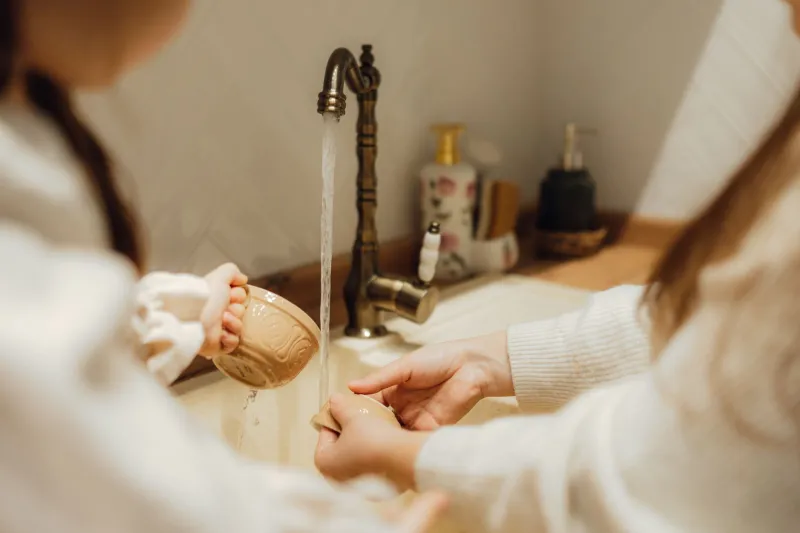
You don't need a cushion, an app, or a quiet room with a plant in the corner. You need a sink. Preferably one with hot water. Maybe some dishes. Definitely some steam.
For people who have tried meditation and found it about as relaxing as a dental appointment, the kitchen sink is an underrated alternative. It's not a loophole or a lesser practice. It's a sensory anchor. And for a lot of busy American readers, it's more accessible than sitting still with your eyes closed while your brain runs through tomorrow's to-do list.
Why the Sink Works
Meditation asks you to do something that doesn't come naturally to most of us: stop, sit, and pay attention to nothing in particular. The kitchen sink asks you to do something you were already doing: run hot water, watch steam rise, feel the temperature change. The barrier to entry is basically zero.
That matters. When you're already stretched thin, a wellness practice that requires a new routine, a new app, or a new identity is a hard sell. A practice that fits into an existing moment is not. You're standing there anyway. You might as well stay for two minutes.
There's also a nervous-system reason this works. Your body responds to sensory input all day long. Warmth, pressure, sound, and rhythm can signal safety. You don't have to believe in anything. You just have to notice. The steam rises. The water runs. Your shoulders drop half an inch. That's the whole thing.
The Two-Minute Script
This isn't a formal meditation. There's no right way to do it. But if you want a little structure, here's a simple script you can try the next time you're at the sink.
Minute One: Arrive
Turn on the hot water. Let it run over your hands. Don't rush to fill the basin. Just feel the temperature shift from cool to warm to hot. Notice the sound of the water hitting the stainless steel. Notice the steam starting to rise. If your mind wanders to your inbox, that's fine. Come back to the water.
Minute One and a Half: Soften
Let your shoulders drop. Unclench your jaw. If you're holding your breath, let it out. You don't have to breathe in a special way. Just let the exhale be a little longer than the inhale. Watch the steam curl up toward the cabinet. Feel your feet on the floor.
Minute Two: Stay
Stay for one more breath. That's it. You don't have to solve anything. You don't have to feel calm. You just have to be there for two minutes. Then turn off the water, dry your hands, and go back to your life.
What It Isn't
This is not a replacement for therapy, medical care, or a meditation practice that works for you. It's not a cure for anxiety. It's a pause. A small, sensory, repeatable pause that doesn't require you to be good at anything.
It's also not about turning your kitchen into a shrine. You don't need a special towel or a candle. The sink is enough. The steam is enough. The ordinary moment is enough.
Tying It to the Rest of Your Day
You can use the sink reset at any transition point: before you start cooking, after you finish cleaning up, when you're about to open your laptop for the evening, or when you've just had a conversation that left you tense. The goal is not to add another task to your list. The goal is to notice the transitions you already have.
If two minutes feels like a lot, start with thirty seconds. If the sink is full of dishes, that's fine. You can still run the water. You can still watch the steam. You can still let your shoulders drop.
Rooted wellness doesn't always look like a retreat. Sometimes it looks like standing at the kitchen sink, hands warm, breath slowing, while the rest of the house waits. That's not a lesser version of calm. That's the version most of us can actually reach.