The Drawer Where Good Intentions Go to Harden
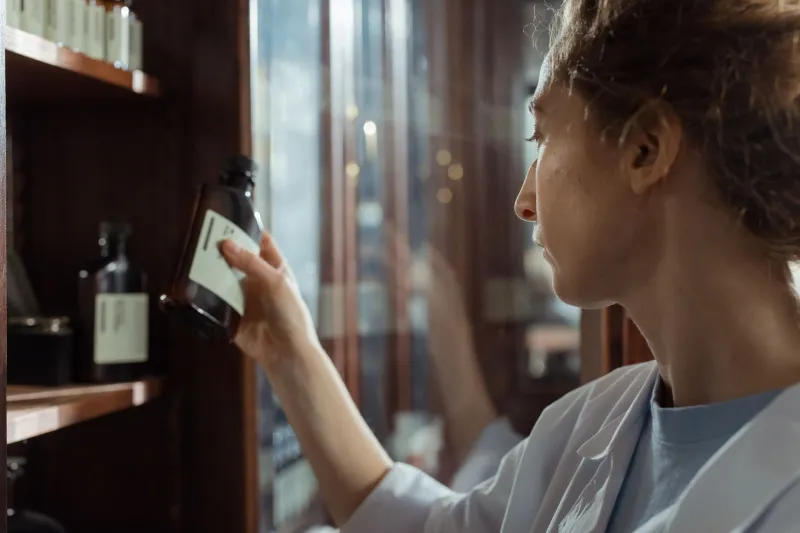
Open the cabinet above the sink. Or the plastic bin under it, or the shoebox on the top shelf of the closet that you moved twice and never opened. Somewhere in your home is a small museum of wellness purchases, and most of the exhibits are past their prime.
This isn't a scolding. It's an observation about a very specific kind of optimism.
What's usually in there
A partly used bottle of magnesium that made you dream strangely for four nights in March. A tub of greens powder, opened once, now a solid brick. Three lip balms, two of which smell like a candle store. A tin of something with a name like Meadow Calm that you bought at a farmers market in a different state. A vitamin D bottle from a winter you'd rather forget. A travel-size tube of arnica gel, unopened, saved for a hiking trip that got rained out.
None of this makes you a sucker. It makes you a person who has tried things.
Buying is a promise you make to a future version of yourself
Most wellness purchases aren't really about the product. They're about the person you intend to become by Thursday — the one who takes her supplements with breakfast, moisturizes before bed, remembers to use the balm. The bottle is a down payment on that person.
Which is why the half-used items are the most interesting ones. A product you finished was a habit that stuck, or at least an experiment that held up. A product you opened twice and abandoned is a question you already answered: not for me, not right now. That's useful information sitting in a cabinet, gathering dust and taking up the shelf you actually need for the thermometer.
Expired doesn't always mean dangerous — but it does mean done
Here's the practical part. Supplements generally lose potency rather than turn toxic as they age, but a capsule from four years ago isn't doing much for you either. Opened jars, tinctures, and water-based creams are a different story — once air and fingers get in, bacteria and mold get a foothold, and the preservative system has a shelf life of its own.
Loose rules of thumb, not laws:
- Opened creams and balms: about 6 to 12 months, sooner if the texture, color, or smell has changed.
- Oils and serums: 6 to 12 months, and they'll tell you when they've turned rancid.
- Tinctures and liquids: check the label; many are fine for a couple of years, some aren't.
- Capsules and tablets: look for a date. Past it by a year or two, it's clutter.
If something is separated, discolored, crusty, or smells wrong, the decision has been made for you.
How to get rid of it without ordering more
This is the trap: cleaning out a cabinet becomes a shopping list. Resist that for at least a week.
For disposal, a few sensible defaults:
- Take-back kiosks. Many pharmacies and some police stations host them. These are aimed at prescription medications, but they'll take what's accepted locally — check before you drive over.
- Municipal household hazardous waste days. Most counties run these a few times a year and take the weird stuff.
- Don't flush it. Crushing pills down the sink is a habit worth retiring.
- Empty, rinse, and recycle what you can. Boxes and glass usually go in the bin; mixed-material pump bottles often don't. Scratch your name off prescription labels.
- Unopened and in-date? Some shelters and community health programs accept sealed personal care items. Call first — most only take new, sealed donations.
Build a cold-season kit that actually gets used
The test for what stays is simple: did you reach for it more than once in the last year? If not, it goes, and you don't replace it.
What tends to survive that filter in the winter months, for most households:
- A saline nasal spray, because dry indoor heat is relentless.
- Honey and lemon, or whatever hot drink you reliably make when your throat hurts.
- A fragrance-free moisturizer and one lip balm you actually like.
- A basic digital thermometer and a box of bandages.
- An electrolyte packet or two for the days you've been sick.
- Vitamin D, if your clinician suggested it — not because a podcast did.
That's a short list. That's the point. Six things you know how to use beat twenty you're saving for a version of yourself who hasn't shown up yet.
One in, one out
When the cabinet is clear, try this: nothing new comes in until something old is finished. It sounds restrictive and turns out to be a relief. You stop buying duplicates of things you already own, and you start noticing which products you genuinely miss when they run out — which is the only honest review that matters.
A cabinet is a small, private record of what you've tried and what you've let go of. Cleared out and honest, it's a much better thing to look at than a shelf full of maybes.