Your Energy Has a Winter Pantry, Too
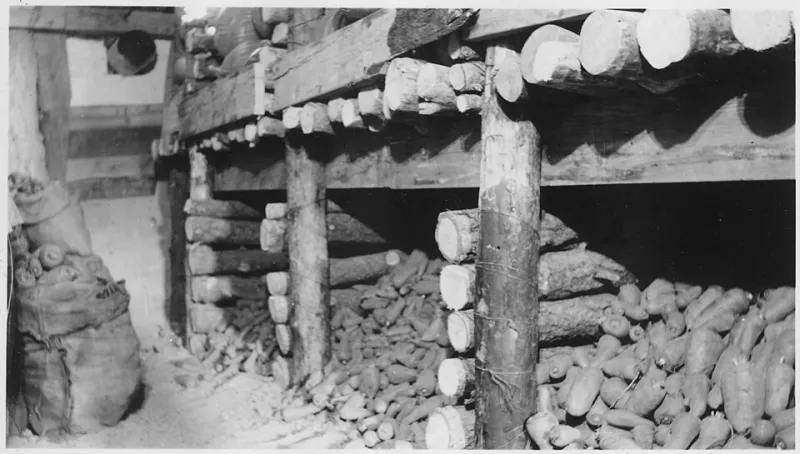
Photo: Unknown authorUnknown author or not provided, Public domain, via Wikimedia Commons
By mid-November, the light has already changed. In much of the US, the sun is setting before dinner, the farmers market tables are piled with squash and carrots, and your body may be sending quiet signals you’ve been taught to override: sleepier earlier, hungrier for warm food, less interested in the full-speed version of yourself you ran on in July.
We tend to treat that shift like a personal failure. Root vegetables don’t. A carrot in a cellar isn’t slacking. It’s doing exactly what the season asks: holding its resources, staying cool, and waiting for the right conditions to grow again. That’s not productivity culture. It’s body awareness with a very old example.
The cellar isn’t a stockpile. It’s a set of conditions.
A root cellar works because of the environment: cool, dark, stable, not too wet, not too dry. It isn’t about cramming in as much as possible. It’s about creating conditions where what you have can last.
Your energy works the same way. Winter isn’t the time to demand a summer output from a winter body. It’s the time to ask a more practical question: what conditions help me last well through the next few months?
For some people, that means protecting sleep. For others, it’s eating warmer, slower meals, getting daylight on your face before noon, or moving in shorter bursts instead of long, punishing workouts. The point isn’t to optimize. It’s to notice what your body is actually asking for and stop treating rest as something you have to earn.
Three bins: keep, use, release
Here’s a simple framework inspired by the root cellar. Think of it as three bins, not a to-do list.
Keep: conserve what restores you
What actually restores you in winter? Not what sounds impressive. Not what worked in June. Keep the routines that leave you steadier.
Maybe it’s a consistent bedtime, even on weekends. A warm breakfast instead of a cold smoothie you drink while shivering. Socks that make the floor less hostile. A ten-minute walk at lunch when the sun is highest. A pot of beans or soup that gives you several easy meals.
Conservation is not laziness. A parsnip stored at the right temperature isn’t doing less than a parsnip in a hot kitchen. It’s just not being asked to do something impossible.
Use now: spend energy on what’s perishable
Some things can’t wait until spring. Daylight is one. Connection is another. If a friend invites you for a walk on a bright Saturday, that may be a use-now kind of energy. If you’ve been meaning to cook a big pot of something warm, that’s a good use of a slow afternoon.
Use-now doesn’t mean spend everything. It means recognize what has a short window. A sunny lunch break in November is not the same as a sunny lunch break in May. Use it, but don’t treat every usable moment as proof that you should be doing more.
Release: let it wait until spring
The hardest bin. Winter often brings a pile of shoulds: the ambitious fitness plan, the home project, the social calendar you’d never keep in July, let alone January. You don’t have to abandon them forever. You can put them on a spring shelf.
Write them down if that helps. Then give yourself permission to stop carrying them around. A root vegetable doesn’t spend December trying to sprout in the dark. It waits. There’s wisdom in that, and it doesn’t require a five-step system.
A body check beats a progress chart
Winter energy management can go sideways when it becomes another performance metric. You are not a battery with a percentage. You’re a whole person with a nervous system, digestion, sleep needs, and a mood that responds to light and weather.
Try a simple body check once a day. Not a journal you’ll abandon by Thursday. Just three questions: Am I cold, tired, or hungry right now? What would help with one of those? What can I take off my plate today?
That’s it. If the answer is a snack, a nap, a sweater, or canceling one thing, that’s useful information. If the answer is “I don’t know,” that’s useful too. It means you may need more quiet before you can hear anything.
Keep the metaphor, lose the guilt
The root cellar mindset isn’t about hoarding energy or shutting down until March. It’s about respecting conditions. Some days you’ll have plenty to spend. Other days you’ll need to keep the lid on and let things stay cool.
This winter, try one small experiment: decide what you’re keeping, what you’re using now, and what you’re releasing until spring. Then let the answer be simple. Warm food. Earlier nights. A little daylight. Fewer obligations that drain you. More of what makes the season feel survivable, even pleasant.
Root vegetables aren’t racing toward spring. They’re holding what matters until the conditions change. Your body already knows how to do that. You just have to stop asking it to act like it’s July.