Before the Sock: A Slower Morning That Doubles as a Body Check
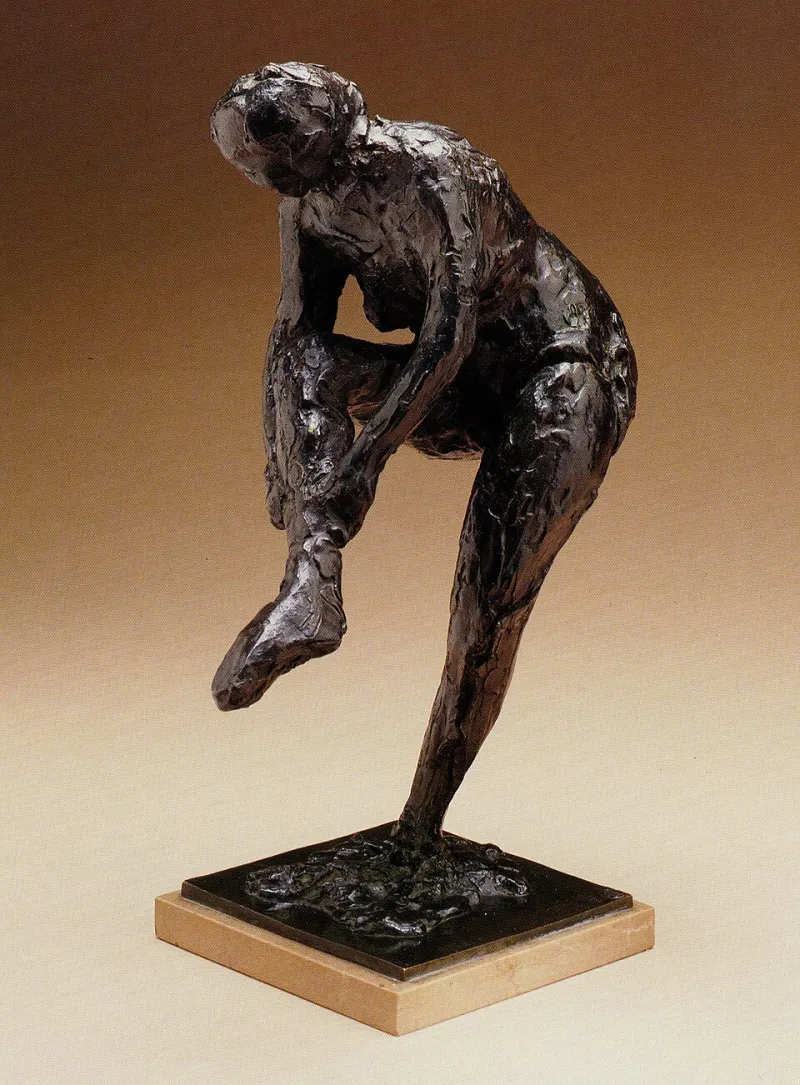
Photo: Edgar Degas, CC0, via Wikimedia Commons
Most of us treat getting dressed as invisible time. It happens between the alarm and the coffee, a blur of drawers, hangers, and one-legged balancing acts we perform without thinking. But that blur is also a daily window into how your body is moving. Not a fitness test. Not a reason to panic. Just a low-stakes check you are already doing, whether you notice it or not.
At Bhuwell, we tend to favor routines that fit inside real life rather than ones that require a separate block of time you have to protect. The morning dress routine is a good example. It is already happening. The only change is to slow it down just enough to notice what your body is telling you.
The movement you already do
Think about the last time you put on socks. You may have sat on the edge of the bed, hinged forward, reached toward your foot, and pulled. Or you may have balanced on one leg by the dresser, hand hovering near the wall. Either way, you asked your hips, ankles, back, and sense of balance to cooperate before you had finished your first glass of water.
That is not nothing. It is a small, ordinary movement snack. And because it happens every day, it gives you a steady stream of information. Does one side feel tighter than the other? Does bending toward your shoes feel different than it did last week? Do you reach for the wall more often than you used to? These are not diagnoses. They are simply notes from the body.
The useful part is not judging the notes. It is noticing them. A lot of us move through the morning on autopilot, then wonder why we feel stiff by lunch. A slower get-dressed routine can interrupt that autopilot without adding another item to your to-do list.
A slower five-minute sequence
You do not need special clothing or a mat. You need a little margin. Try this on a morning when you have five extra minutes, or borrow those minutes from the scroll you were going to do in bed anyway.
-
Sit at the edge of the bed or a chair. Roll your ankles a few times in each direction. Notice whether one ankle feels freer than the other. Stand up slowly and feel your feet meet the floor.
-
Before you reach for your clothes, pause at the drawer or closet. Reach for what you need without rushing. If you have to bend, let your knees soften. If you have to reach overhead, notice whether your shoulders feel open or guarded.
-
Put on your socks or shoes seated if that feels safer. Move slowly enough to feel the hinge at your hips. If you prefer to stand, keep one hand on a wall or dresser. Balance is a skill, not a performance.
-
Step into your pants or skirt with a little care. If you normally hop, try holding something stable and stepping instead. Notice where you tense up. Notice where you can let go.
-
Before you head out the door, do one slow shoulder roll and one easy breath. That is it. You are not trying to stretch your way into a new body. You are simply greeting the one you have.
The sequence should feel almost unremarkable. If it starts to feel like a workout, scale it back. The goal is awareness, not effort.
Reading stiffness without turning it into a diagnosis
Stiffness in the morning is common. It can come from a night in one position, a cold bedroom, a previous day of unusual activity, stress, or simply not moving much. For many people, it eases as the body warms up. That is normal.
What matters is the pattern. If a movement is consistently painful, if you notice numbness or tingling, if you feel unsteady in a way that worries you, or if a limitation is getting worse rather than better, that is a good reason to talk with a healthcare professional. A slow morning routine is not a substitute for care. It is just a way to stay in conversation with your body between the bigger check-ins.
It is also worth saying that you do not need to fix every stiff moment. Some days you will feel like a well-oiled hinge. Other days you will feel like a sock drawer that needs a good shove. Neither is a verdict on your health.
Why this beats the workout you keep postponing
The separate workout is a lovely idea. It is also easy to postpone. The morning is chaotic. The evening is gone. The gym is across town. Before you know it, the workout has become another thing you are behind on.
Everyday movement has a lower barrier. It is already built into your day. You are already bending, reaching, standing, and balancing. When you slow those moments down, you turn them into practice. That is a more sustainable habit for a lot of people than a perfect plan they never get to.
This is not an argument against exercise. It is an argument for not saving all movement for a future version of your schedule that may never arrive. A few conscious minutes in the morning can keep you connected to your body on the days when the workout does not happen.
A morning that meets you where you are
Your get-dressed routine will look different from your neighbor’s. Maybe you are wrangling kids, commuting early, or working from the kitchen table. Maybe you are recovering from an injury or simply in a season when energy is low. The routine can shrink or expand to fit. The only non-negotiable is a little attention.
Try it for a week. Not as a challenge. Not as a before-and-after story. Just as a small, rooted habit: notice the reach, the balance, the bend, the breath. You may find that the sock drawer has been giving you useful information all along.