Two Glasses, Zero Scorekeeping: A Hydration Habit for Heated Homes and Long Days
Photo: Mia Gaitanidis, CC BY-SA 4.0, via Wikimedia Commons
By mid-November, most of us are living in two climates: the cold, dry air outside and the warm, dry air inside. The furnace clicks on, the humidity drops, and suddenly every article you scroll past is telling you to drink more water. Often with a tracker. Often with a number. Often with a faint implication that you are failing at a basic human function.
Here is a different idea, one that fits a real Tuesday better than a dashboard does: keep two glasses in two fixed spots. One on the kitchen counter before coffee. One by the bathroom sink before you brush your teeth at night. No app, no ounce counting, no eight-glasses-or-else framing. Just two reliable cues attached to things you already do.
Why the Counter Beats the Dashboard
Most hydration plans fail for the same boring reason: they ask you to remember something in the middle of a day that is already asking you to remember everything else. A reminder app can help for a while, but it also turns a body need into a task on a list. And tasks get skipped when the list gets long.
Environmental cues work differently. A glass sitting on the counter is not a nag. It is an object in your path. You see it while you are waiting for the coffee to finish. You see it while you are reaching for the faucet. The cue does the remembering, which is useful for anyone whose brain is already carrying a house key, a work deadline, and the name of a neighbor's dog.
This is also a gentler way to practice mind-body awareness. Instead of chasing a target, you create two small moments to notice thirst, temperature, and how your body feels in dry winter air. The point is not to hit a perfect number. The point is to stop letting the day go by without a single check-in.
Anchor One: The Morning Glass Before the Coffee
Put a clean glass on the kitchen counter the night before. In the morning, fill it when you walk into the kitchen. Drink it while the coffee brews, or while you wait for the kettle. It does not need to be ice cold, and it does not need to be a full pint. Room temperature is fine. In winter, some people prefer barely warm water, which is also fine.
This is not about replacing coffee or making a moral production out of hydration. Coffee stays. The glass simply comes first. If you take medication with water, that ritual can double as your anchor. If your clinician has given you fluid restrictions, follow that instead of any general habit article, including this one.
The beauty of this anchor is that it is boring in the best way. It does not require a new bottle, a new app, or a new identity as a Person Who Hydrates. It requires a glass and a spot.
Anchor Two: The Night Glass by the Sink
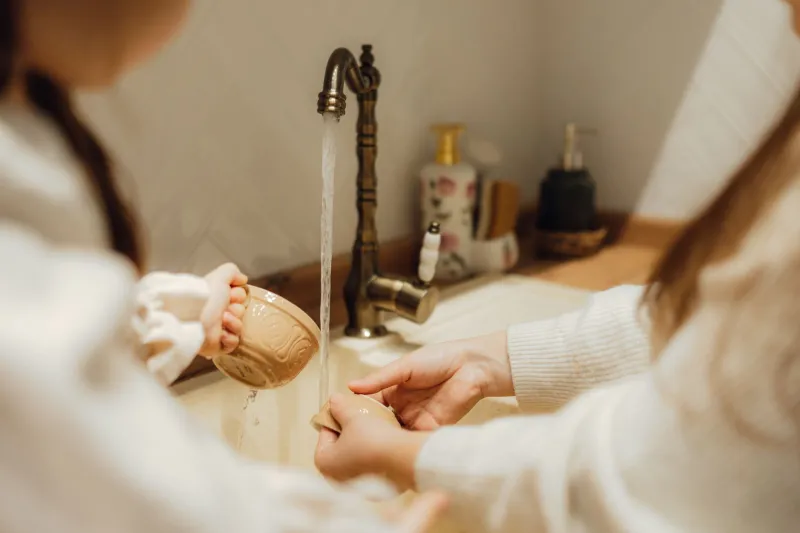
At night, place a small glass by the bathroom sink. Fill it before you brush your teeth. Sip it while you go through the familiar motions of closing down the day. This works because brushing your teeth is one of the most reliable habits most adults have. You do not need to remember to brush your teeth. You just do it. The glass rides along.
Keep the evening glass modest. A large amount of water right before bed is not a kindness to anyone who already wakes up at 2 a.m. A few sips, a small glass, or a rinse-and-sip routine is enough. The goal is a cue, not a challenge.
The Math Is Not the Point
Hydration guidance often gets boiled down to a number, but bodies are not spreadsheets. Fluid needs shift with weather, activity, medication, and what you ate. A bowl of soup counts. Tea counts. Coffee counts. So does the water in fruit, broth, and vegetables. The old idea that coffee dehydrates you is mostly overstated for moderate drinkers; it contributes fluid, even if it is not the only thing you should drink.
In cold weather, thirst can be easy to miss. We drink less because we are not hot, and heated indoor air can leave skin, lips, and sinuses feeling dry. That is where the two anchors help: they are not a full plan, just two dependable moments when water is in front of you. Two reliable glasses are better than eight forgotten ones, and they are a floor, not a ceiling. If you are thirsty, drink. If you want more, have more.
What About Coffee, Soup, and Dry Winter Air?
Keep the coffee. Add the glass. If you are having soup for lunch, that is part of the picture. If you are drinking herbal tea at 3 p.m. because the afternoon has gone dim, that counts too. The two-glass habit is simply a baseline that survives travel days, deadlines, and the stretch between Thanksgiving and New Year's when routine gets weird.
When you are away from home, recreate the anchors in miniature. Put a glass by the hotel sink at night and by the coffee maker in the morning. The habit is not about your kitchen. It is about pairing water with two existing transitions: starting the day and ending it.
A Small Caution, Because Bodies Are Not Generic
Drinking more water is not automatically better for everyone. People with certain heart or kidney conditions, or those on fluid-restricted diets, should follow medical guidance rather than a general wellness article. And forcing large volumes of water is not a virtue. The two-glass approach is deliberately small for that reason. It is a nudge, not a prescription.
The Setup Takes Two Minutes
Tonight, put a glass by the bathroom sink. Tomorrow morning, put one by the coffee maker. That is the whole system. No notifications, no streaks, no guilt if you miss a day. The glass will be there tomorrow. The habit is designed to survive a real day, not a perfect one.
Rooted wellness is often less about adding a new program and more about making one small thing easier to return to. Two glasses, two ordinary moments, no scorekeeping. That is a hydration habit that can last longer than the app you downloaded in January.