When Your Brain Has Too Many Tabs Open, Open a Jar
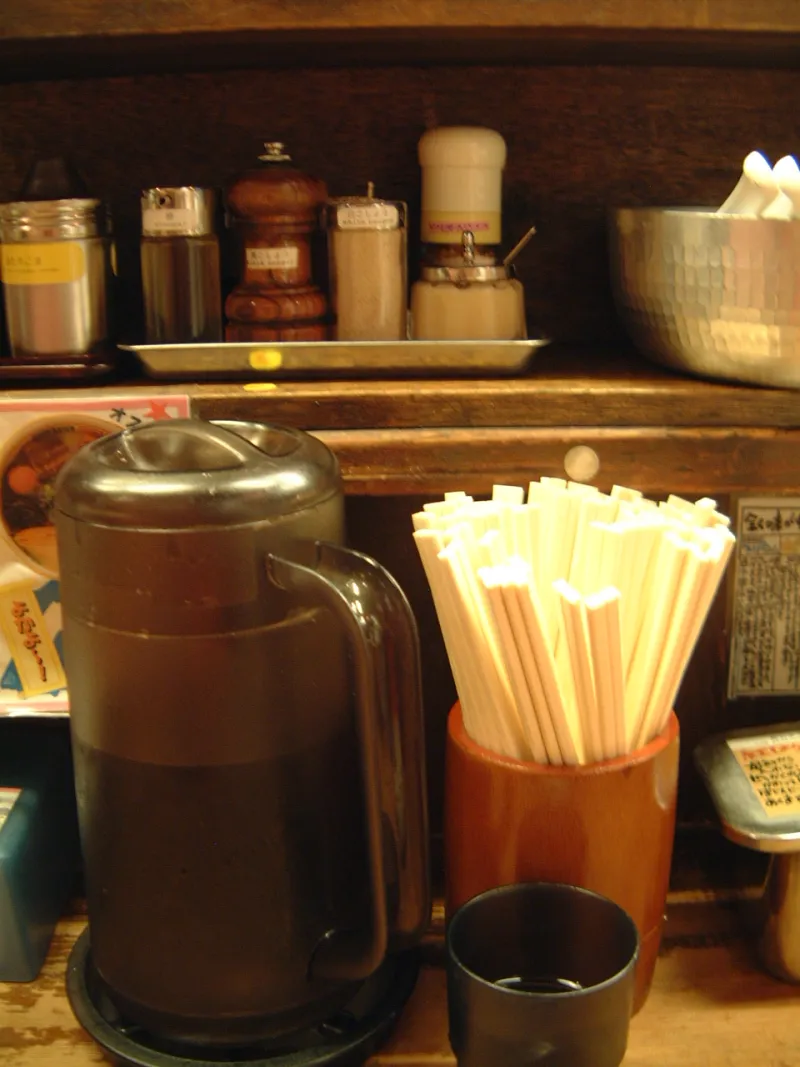
Photo: Marufish from Alor Setar, Malaysia, CC BY-SA 2.0, via Wikimedia Commons
At 3:47 on a Tuesday, the afternoon can start to feel like a browser with too many tabs open. There is the task you are doing, the task you forgot, the email you are avoiding, and the low hum of something in the background you cannot quite name. You do not need a full reset. You need a hinge—a small, physical moment that helps you close one tab and open the next.
That is where the spice drawer comes in. Most American kitchens already hold a small collection of smells that are strong enough to get your attention and ordinary enough to ignore on a normal day. Cinnamon from last December. A half-used jar of dried mint. Cloves pushed to the back. Maybe a strip of dried orange peel you meant to use in tea. None of it is exotic. That is the point.
The jar is the invitation
This practice is not about becoming a person who has a scent wardrobe. It is about using what is already within arm's reach. You do not need to buy a diffuser, download a timer, or unroll a mat. You need one jar, one quiet breath, and about a minute.
The move is simple: open the jar, bring it a few inches from your nose, and take two or three slow, gentle inhalations. Not a deep snort. Not a wellness performance. Just enough to notice something specific—the warm edge of cinnamon, the cool lift of mint, the sharp little wake-up of citrus peel. Then close the jar and name the next thing you are going to do.
That last part matters. The scent is not the whole practice. The scent is the doorway. The naming is how you walk through it.
A 60-second version that fits a real afternoon
You can do this standing at the counter with the dishwasher running. You can do it at a desk if you keep one small jar in a drawer. You can do it in the two minutes between a work call and picking up a child from school.
Here is the loose shape of it:
- Choose one jar. Open the drawer and pick the first scent that seems pleasant, not the one that seems most impressive.
- Open it and pause. Hold the jar a few inches away. Let your shoulders drop without making a project of it.
- Take two or three slow inhalations. Keep them gentle. If the scent is sharp enough to make you cough, that is not the jar for this moment.
- Notice one physical thing. The counter under your hand. The floor under your feet. The temperature of the air. One thing is enough.
- Close the jar and name the next task. Say it quietly or just think it: reply to the invoice, start the pasta water, send the scheduling text.
That is the whole thing. It is closer to a pause button than a ritual. The goal is not to feel transformed. The goal is to stop moving on autopilot for one minute and then choose your next step on purpose.
Pick a scent that does not ask too much
Cinnamon is the obvious place to start because it is warm, familiar, and usually already in the cabinet. Mint is a good option for people who want something brighter. Cloves are strong, so use them sparingly—just a quick inhale, not a long huff. Dried citrus peel is gentle and a little cheerful. A jar of dried oregano or rosemary can work too, though it may make you think about dinner instead of your inbox.
The best scent is the one that makes you pause without making you sneeze. If you have allergies, asthma, or sensitivity to strong smells, skip this practice or use a very mild jar at a distance. This is not a test of toughness. If a scent feels irritating, it is the wrong tool for the job.
You can also use the same jar every day. Repetition is not a problem here. A familiar smell can become a small cue that says: we are changing gears now.
Make it a hinge, not a habit project
The fastest way to ruin a practice like this is to turn it into a system. Do not build a spreadsheet of scent rotations. Do not order matching jars. Do not decide that you must do it at precisely the same time every afternoon.
Use it when you notice the crowded feeling. Use it between tasks. Use it before you open a document you have been avoiding. Use it after a caregiver shift when you need to shift out of alert mode and into your own evening. The jar is not a commitment. It is a small, repeatable way to mark a transition.
That is especially useful for desk workers who spend hours in the same chair, and for caregivers who spend hours tracking someone else's needs. A scent break is short enough to be realistic and physical enough to pull you out of the loop for a moment. It does not require privacy, special clothing, or a quiet room. It requires a jar and a little willingness to pause.
What this practice is not
This is not medical treatment. It is not a cure for anxiety, burnout, or attention problems. It is not a replacement for rest, food, water, or professional care. It is also not a productivity trick designed to squeeze more output out of you.
It is a sensory reset. A small, kitchen-rooted pause. The kind of thing you can do with a jar of cinnamon while the kettle heats up.
So the next time your brain feels like too many tabs are open, do not try to close all of them at once. Open a jar instead. Take two slow breaths. Notice the counter. Then choose the next tab.